
The Case for Restraint
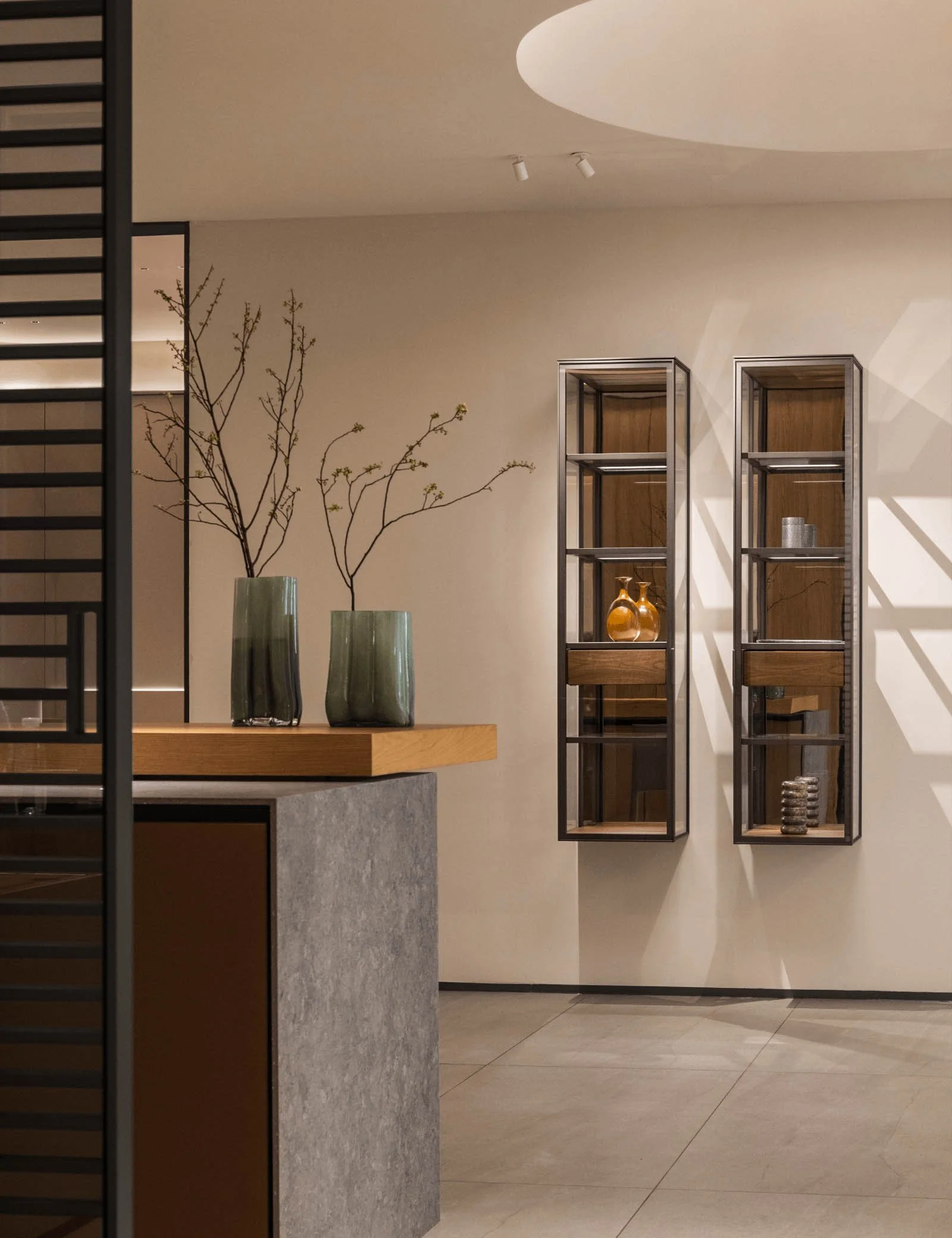
There is a particular kind of room that lowers your shoulders as you walk into it. Nothing announces itself. The light is even, the surfaces are quiet, and the few things on display have been chosen rather than accumulated. It is tempting to call this minimalism, but that is not quite right. Minimalism can be cold. What these rooms have is restraint, which is a warmer and more difficult thing.
Knowing what not to do
Restraint is often described as doing less, but that undersells it. The harder discipline is resisting the things you easily could do — the extra cabinet, the feature wall, the clever detail that draws the eye for no reason other than that it can. A restrained room is full of decisions you cannot see, decisions to stop. This is the principle at the centre of how Rara approaches a space: not the pursuit of more, but the careful editing of what earns its place.
Space as a material
In a considered interior, empty space is not what is left over once the furniture is in. It is a material in its own right, as deliberate as timber or stone. The pause between two pieces of joinery, the bare run of wall above a console, the breathing room around an object — these are placed, not merely permitted. Get them right and a room feels generous even when it holds very little. Get them wrong and the same room feels either crowded or unfinished.
Quiet is not the same as plain
It would be a mistake to read restraint as an absence of richness. The pleasure of a quiet room is in its depth: the grain of a veneer catching the light, the weight of a well-made drawer, the way a single branch in a glass vase does the work that a dozen objects would only confuse. Luxury here is tactile and slow rather than loud. It rewards living with, not just looking at.
A room that ages well
Restraint is also a hedge against time. Rooms that shout tend to date quickly, because they are tied to the moment that made them feel exciting. A quieter room has less to go out of fashion. It leans on proportion, material and light — the things that were good a century ago and will be good a century from now — and so it tends to feel current for far longer. This is the practical case for restraint, underneath the aesthetic one: it is simply the version of a home that lasts.
---
Restraint is best understood in a room rather than on a page. Visit our Waterloo showroom at 723–725 Elizabeth Street to spend a little time in spaces built on the idea.
