
A Room That Holds Still
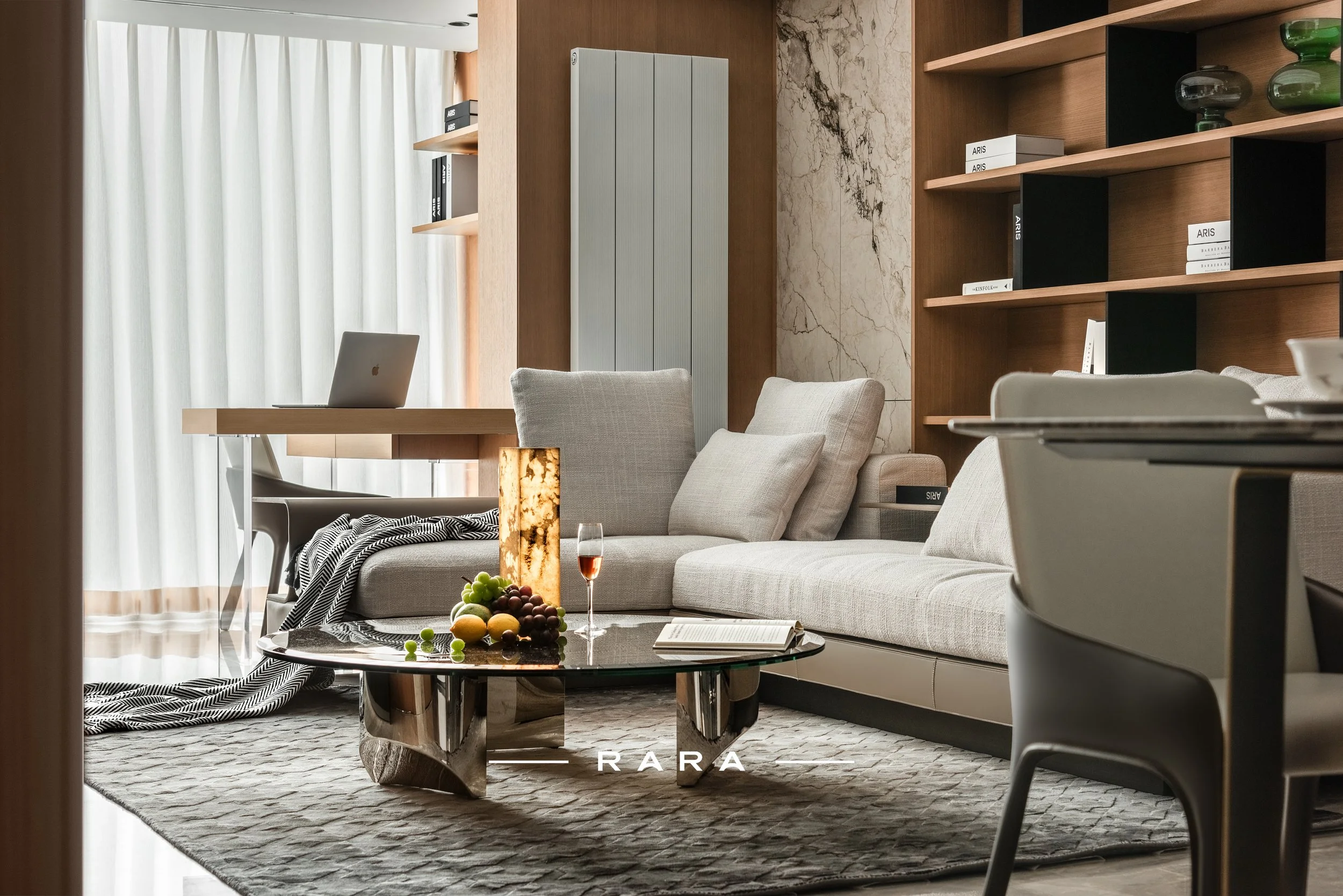
A living room is the part of a home that does the most work and is asked to look effortless while doing it. It holds the everyday — the reading, the talking, the long Sunday afternoons — and yet we want it to feel composed, as though none of that effort shows. The rooms that manage this tend to have one thing in common. They hold still.
Fewer things, chosen well
A room that holds still is not an empty room. It is a room where everything has been chosen rather than gathered. A good sofa, a low table with some weight to it, a wall of joinery that absorbs the clutter, a single object or two left out to be looked at. The discipline is in the editing: deciding what stays in view and trusting that the rest can be put away. A room with less in it, chosen better, almost always feels calmer than a room with more.
The quiet authority of good materials
When there is less to look at, what remains has to be worth looking at. This is where material does the talking — the depth of an oak grain, a band of marble running floor to ceiling, the cool gleam of a polished table base against the soft pile of a rug. None of it shouts. It simply holds its own, slowly, in a way that a busier room never gives you the chance to notice. Quiet luxury is less a style than a willingness to let good things be seen one at a time.
Storage is what makes calm possible
It is worth saying plainly: calm rooms are usually well-organised rooms. The serenity of a considered living space rests on the unglamorous fact that there is somewhere for everything to go. Joinery that handles the books, the cables, the household paperwork is what allows the surfaces above to stay clear. The visible calm and the hidden order are the same project. A room holds still because the life inside it has been given a place to rest.
A home that is not trying too hard
There is a confidence in a room that does not perform. It does not need a feature in every corner or a talking point on every wall. It trusts proportion, light and a few good things to carry it, and in doing so it gives you somewhere to actually relax. That, in the end, is what a living room is for — not to be admired so much as to be lived in, quietly, for a long time.
